
Finding Residents Across Mesa
A useful Mesa residents directory search starts with the record that best fits the clue. A current address points first to the Maricopa County property roll. A person’s name may lead to property, recorded documents, court cases, a corporation filing, or a professional license. An older address belongs in a dated city directory, deed chain, census schedule, or obituary search. No source is a complete resident roll. Owners may live elsewhere, renters may never appear, and a record can outlast the relationship it once documented.
Build a match from facts that do not depend on one another. An assessor parcel number paired with a deed number is strong. A court name paired only with another same-name web result is weak. Save the record identifier and search date, then confirm the underlying file with its custodian.
- Search the county property roll by exact address or full owner name. Compare the situs address with the tax-mailing address.
- Use the deed number from the parcel page to open the Recorder index. Record the indexed parties and legal description.
- Check the correct court level, business registry, or license board when the search involves a case or affiliation.
- Use voter self-service only with the required identity details. It is not an open street list.
- When a portal ends, ask the actual city, county, or state custodian for a defined existing record.
Mesa Resident Records Desks
Mesa is not the county seat. The city keeps municipal court, permit, fire, police, council, code, and neighborhood-contact files, but the core land and Superior Court trail is held at the county level. The Recorder and many central county services are in Phoenix. The Clerk also provides a Southeast Court Complex in Mesa for source-court access. State agencies handle vital certificates, voter self-service, corporations, licenses, and historical records. That split explains why a search limited to mesaaz.gov will miss much of the official resident trail.
Maricopa County Recorder
301 W. Jefferson St., Suite 200
Phoenix, AZ 85003
602-506-3535
Maricopa County Assessor
Countywide parcel and ownership roll
Online property and GIS access
Public assistance channels online
Superior Court Clerk
222 E. Javelina Ave.
Mesa, AZ 85210
Public computers weekdays 8–5
The office name matters as much as the record name. Arizona marriage licenses and divorces belong with the Superior Court Clerk, not the Recorder. Taxes are separate from deeds. Birth and death certificates go to county or state vital registration, subject to eligibility rules.
Search Mesa Property Records
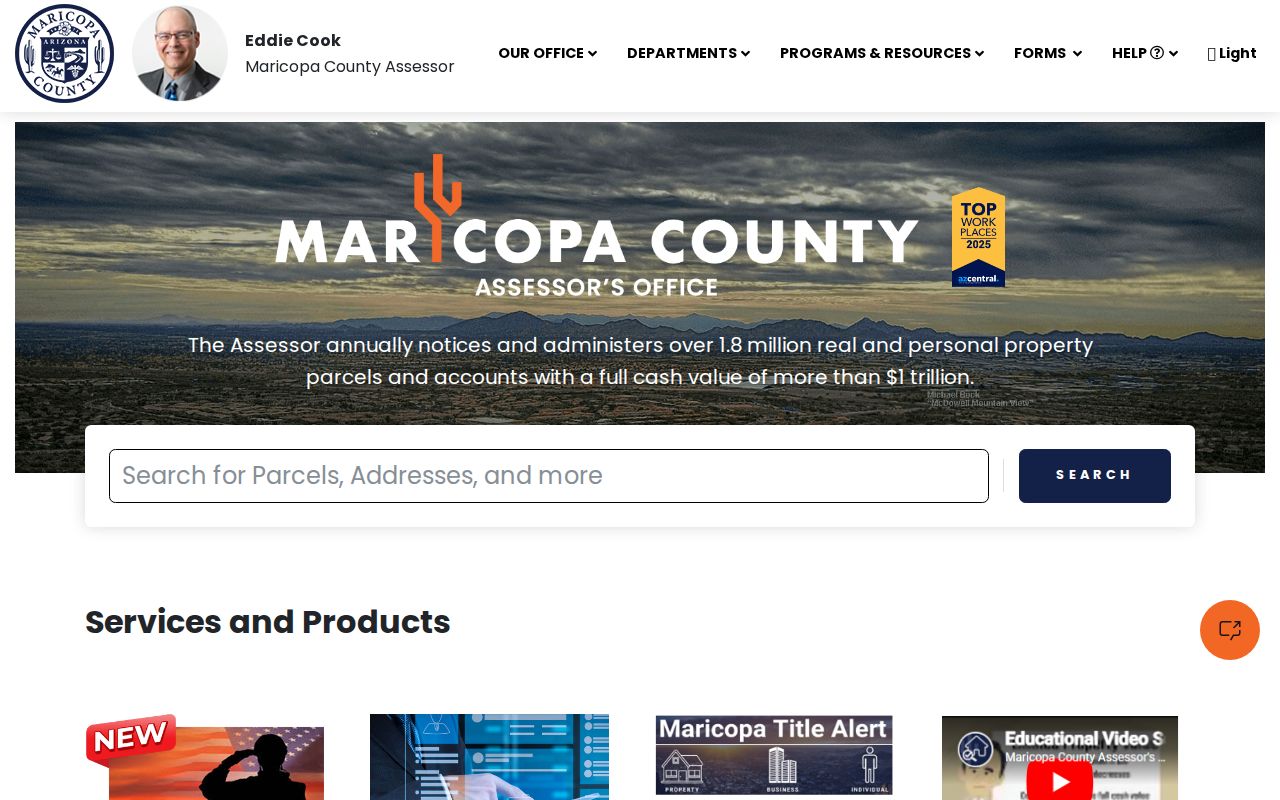
The Maricopa County Assessor search is often the fastest name-to-address or address-to-owner bridge in the Mesa residents directory. Its parcel page can show the assessor parcel number, owner and mailing address, situs address, subdivision, legal description, valuation history, building facts, sales, and the current deed reference. Situs means the mapped property location. The mailing address is where tax correspondence goes. A difference between them is a clue about ownership administration, not proof that anyone lives or does not live at the property.
| Assessor input | Accepted form | Practical check |
|---|---|---|
| Parcel number | Dashes optional | Keep any final letter |
| Owner name | Use the full first name | Do not abbreviate |
| Address | Number, direction, street, type | Try omitting street type |
| Business property | Name, address, account, roll, lease | Choose the right property class |
| Mobile home | Owner, address, account, VIN | Use the dedicated mode |
The captured Mesa-area Assessor portal shows the official entry point:
Use the resulting APN and deed reference as stable keys. They reduce false matches when names, mailing addresses, or street forms change.
Follow Mesa Recorder Names
The Maricopa County Recorder holds deeds, liens, releases, plats, CC&Rs, affidavits, and other recorded instruments. Search a person by last and first name, or use Business Name for a trust, HOA, or subdivision. Date and document-code filters can separate an ordinary deed from a plat or trustee-sale notice. A result identifies the document number, recording date, code, parties, page count, image control, and purchase choices. The deed image may add the legal description, acknowledgment, and return address.
A common mistake is to assume the Recorder’s full-text mode is the whole archive. It covers only the latest two years. Structured name, document-number, docket, and book-page modes reach farther, though the current interface does not state one simple first online year. Difficult searches can move to free appointment inspection, the Phoenix counter, phone help, mail order, or a narrow administrative request. Web images are unofficial and free. Official copies cost $1 per page, and certification adds $3 per document.
- Index
- A finding aid that points to a filed document; it is not always the document image.
- Parcel
- A mapped unit of land identified by an assessor parcel number, or APN.
- Grantor and grantee
- The indexed conveying party and receiving party in a transfer.
- Criss-cross directory
- A printed directory arranged by street and address rather than only by surname.
Note: Recorder staff can locate and copy records, but they do not perform a title search or guarantee that a parcel is lien-free.
Current Mesa Resident Rolls
There is no single current Mesa residents directory maintained by government. Several official indexes act like limited directories because each names people in a defined role. The property roll names owners. Recorded documents name parties. Court indexes name parties to included cases. Corporate and license records identify formal affiliations. Voter tools are governed by separate election-law limits. Each record proves only the relationship stated by its custodian.
| Mesa source | People represented | Custodian | Access boundary |
|---|---|---|---|
| Property roll | Current parcel owners | County Assessor | Free search; not occupancy |
| Recorded documents | Indexed parties to instruments | County Recorder | Free index; paid official copies |
| Municipal and state court indexes | Parties in included public cases | Source court or clerk | Gaps and sealed files apply |
| ACC entity records | Agents, principals, filing parties | Arizona Corporation Commission | Entity tie, not residence proof |
| Neighborhood registration | Registered group contacts | City Community Engagement | No household member roster |
The Arizona Corporation Commission entity search can take an entity, statutory-agent, principal, or entity-ID query.
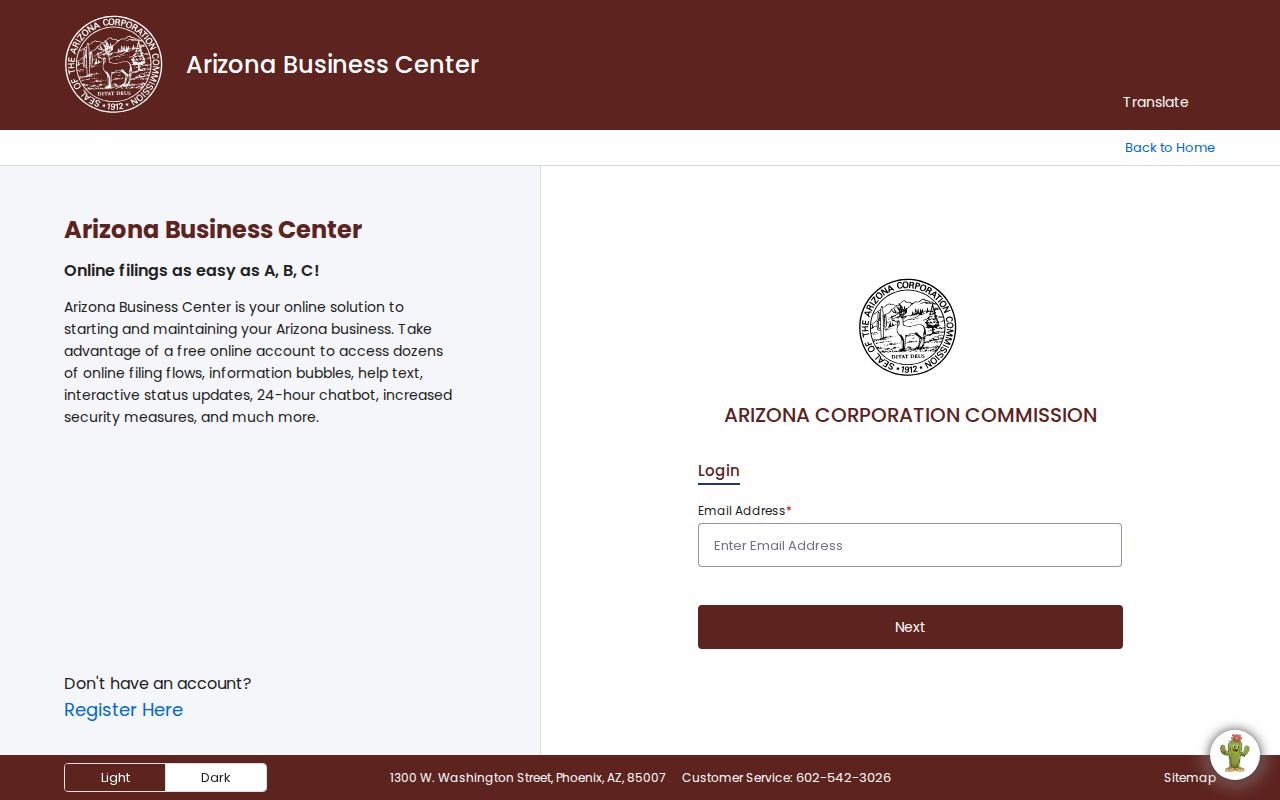
Its profile may show status, known place of business, principals, agent, and filings. A statutory agent is not automatically the owner, and a business address is not proof of a home address.
Verify Mesa Court Names
Court geography matters. Mesa Municipal Court handles city-code and misdemeanor matters. Maricopa County Superior Court holds felony, civil, probate, family, and divorce files. The statewide Public Access index reports data from 177 of 184 courts, but Maricopa Superior contributes only criminal cases and Mesa Municipal contributes only delinquent cases. It also omits sealed, juvenile, mental-health, protection-order, and other protected information. An empty statewide result therefore does not establish that no case exists.
Use the local source when the statewide view is partial. Mesa eCourt accepts a name with required first and last names and optional date of birth, as well as case, complaint, parking-notice, and report-number modes. The Maricopa Clerk docket can be searched by name or case number. Free public computers at the Southeast Court Complex expose the official source-court route, while copies and certification follow the Clerk schedule. Arizona eAccess supplies account-based Superior Court documents filed from July 1, 2010 when the file is eligible.
Note: A court index is a discovery tool; only the source clerk can confirm the official file, restrictions, disposition, and corrections.
Mesa Voter Records Stay Bounded
The public Arizona Voter Information Portal is an identity-keyed self-service tool, not an anonymous browse of Mesa streets.
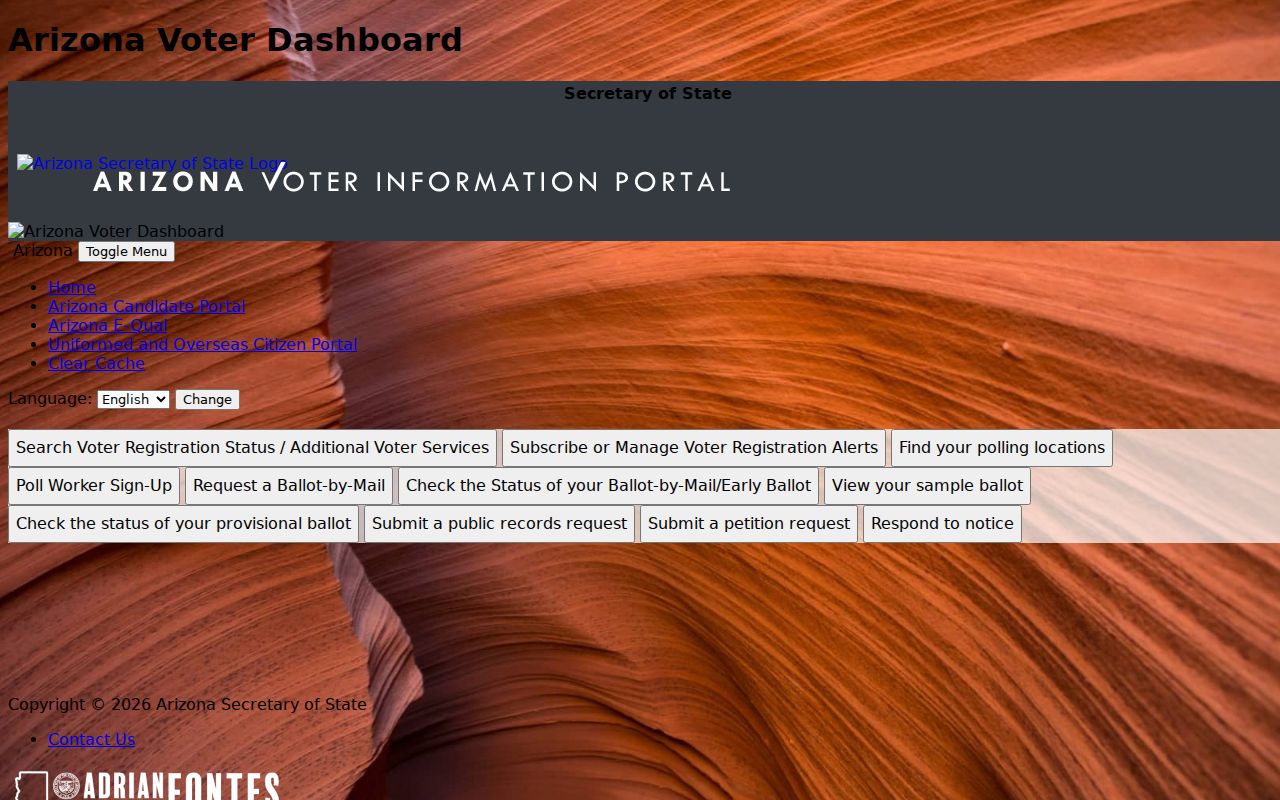
The form helps an individual confirm registration and election information with identifying inputs. It does not reveal a ballot choice.
A county request to confirm one voter calls for full name, date of birth, and last known address. A.R.S. § 16-168 governs the precinct register and limits copies to political, campaign, election, redistricting, or other authorized uses. Records protected under A.R.S. § 16-153 are omitted. The Recorder accepts qualifying requests through its portal, email, fax, form, or free appointment inspection, with charges for selected copies. These limits are part of the Mesa resident-record system, not a search inconvenience to work around.
Historical Mesa Directory Shelves
The strongest verified printed household source is the 1952 Mesa, Tempe, Chandler, Gilbert Mullin-Kille and Baldwin Directory. Its five divisions support searches by surname, street, telephone number, business class, and rural route. The resident section may include a spouse, dependents, ownership mark, occupation, employer, address, and phone. The Householders’ section reverses the route by placing streets and addresses first. That two-way design makes it useful after a deed or assessor search produces an old address.
A 1951 Mountain States Phoenix telephone directory also covers Mesa, and Mesa pages appear within a Phoenix Metropolitan Area volume. The title alone is therefore a poor filter. The Arizona Memory collections, Mesa Public Library’s noncirculating Mesa Room, and Mesa Historical Museum provide digital, staff-assisted, and in-person access. The verified directory years are limited; no complete official year-by-year run was found. Full reading methods and shelf details belong in the Mesa city directory collections.
A directory entry is a publisher’s dated snapshot. It may miss a recent move, a rural household, a refusal, or a name variant. Pair the entry with the deed, census, obituary, or other record appropriate to the same date.
Trace Deceased Mesa Residents
Death research has a separate chain. Arizona birth and death certificates are closed records under A.R.S. § 36-342, and current certified copies require an eligible applicant under §§ 36-324 and 36-325. Historical genealogy images open later under state law. The displayed state collection covers births from 1855 through 1945 and deaths from 1870 through 1970, with noncertified images. A historical image can distinguish a deceased same-name person, but it does not prove current Mesa residence.
The Arizona vital-records office explains the current certificate and eligibility paths.
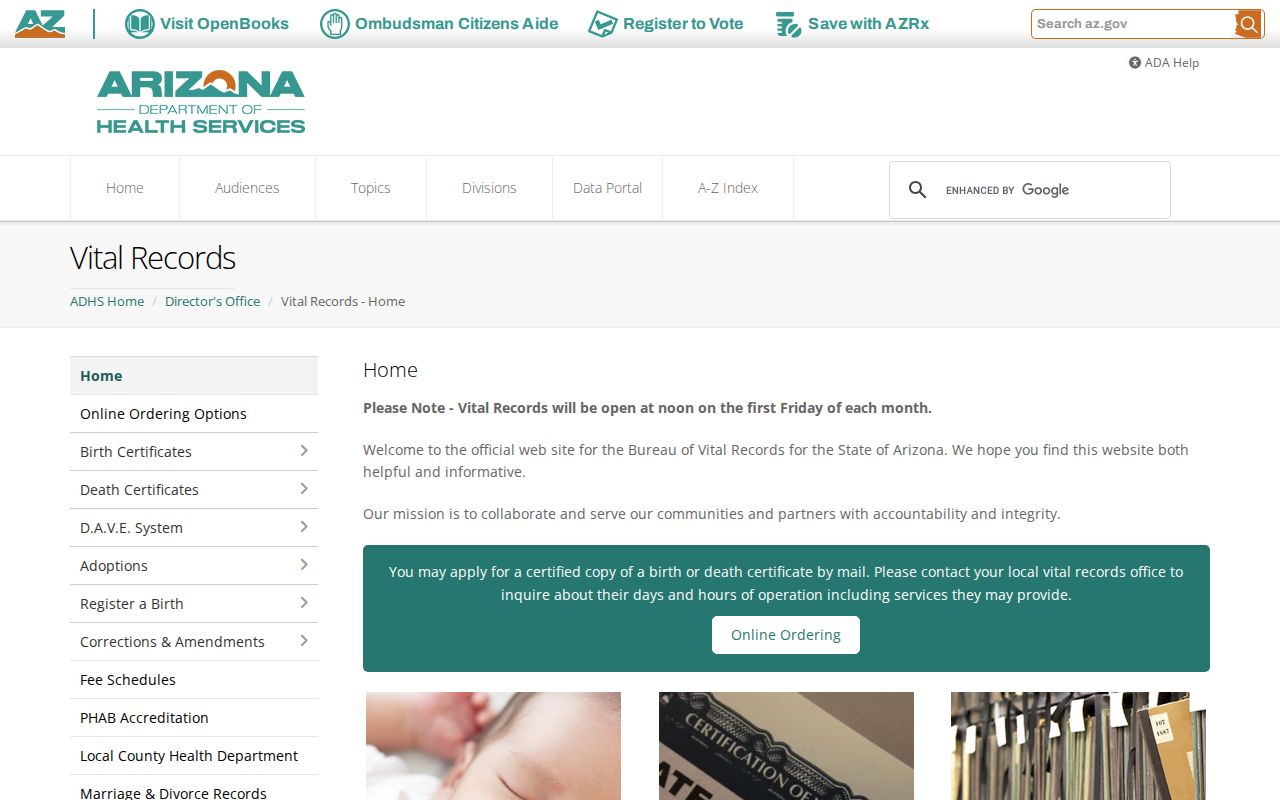
Eligible mail orders require the current application, payment, relationship proof, a self-addressed stamped envelope, and the prescribed identity or notarization step. Marriage and divorce records remain with the Maricopa Superior Court Clerk.
Mesa Public Library adds an obituary search for the Arizona Republic from May 28, 1890 through December 31, 2009. The $15 nonrefundable search uses a mailed form and check or money order. Probate filings, cemetery evidence, and a final deed can then confirm relationships or estate transfers, subject to file restrictions.
Reconnect Through Mesa Archives
Former classmates and civic affiliates may appear in records that are not household rolls. Mesa Community College began as Mesa Extension in 1963 and published the Jacali yearbook from 1965 through 1979. Its archives use is supervised on the second floor of the Paul A. Elsner Library, and unique items do not circulate. Copies may be supplied when an item is not confidential, restricted, or fragile. Alumni newsletters from 2019 through 2026 offer a second dated affiliation source.
The Mesa Room keeps local books, maps, photos, newspapers, scrapbooks, and microfiche in the Main Library basement. One-hour appointments run Tuesday through Thursday in morning and afternoon blocks, should be reserved at least a week ahead, and require enough names, property clues, or call numbers for staff pulls. Mesa Historical Museum takes written research requests, supervises approved work, and offers a partial online catalog searchable by keyword, collection, name, date, and place. Catalog spelling and photo metadata can contain errors, so the underlying item still needs review.
Request Missing Mesa Records
The Mesa Public Records routing page separates requests for City Court, Development Services, environmental reviews, fire, neighborhood contacts, police, and other city files.
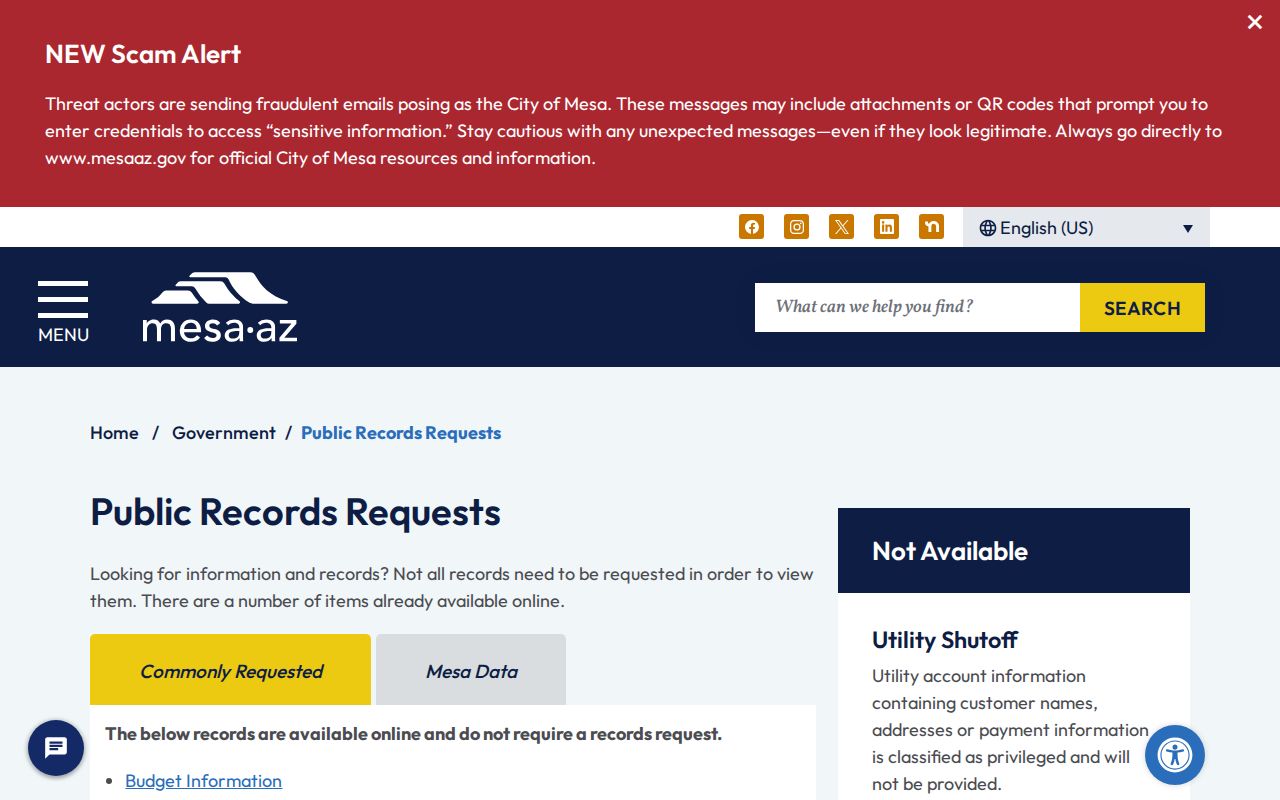
That routing is useful because a broad request sent to the wrong office often slows the search. It also points birth, death, marriage, divorce, tax, and parcel-line questions to their actual county or state keepers.
Arizona Public Records Law, A.R.S. §§ 39-121 through 39-121.03, begins with open inspection but does not set one fixed response period for every request. Ask for an existing record, not an answer that an agency must create. Name the custodian, date range, person or address, record type, and desired electronic format. Inspection is ordinarily free. Noncommercial copy charges follow authorized or actual reproduction cost, while commercial-purpose requests follow added certification and fee rules. Statutory confidentiality, court sealing, personal privacy, and the state’s best-interests test can still require withholding or redaction.
How Mesa Records Changed
Record choice follows Mesa’s growth. The town remained about one square mile for its first five decades. Six annexed subdivisions doubled it in 1930, and later postwar growth spread Mesa far beyond the area covered by its earliest directories. An old postal label, present city boundary, and current parcel map may describe different geographies. Preserve the subdivision, legal description, and APN when a street name or city line no longer matches.
Maricopa County’s Recorder dates to February 14, 1871. A county account from the 1960s described current records being microfilmed while older holdings back to county organization were also filmed. During sorting, staff even found dynamite among courthouse holdings. That is a record-management anecdote, not evidence of a fire or lost series. In Mesa, telephone service began in 1902 and direct dialing followed after 1949. Around 2010, a library project digitized 1,286 closed-stack Mesa Room documents and converted 13 Washington Park oral histories from cassette.
These shifts explain the mixed Mesa residents directory: paper volumes, microfilm, modern indexes, and office-only files coexist. Search the format that fits the year, then use another source to test the result.
Protect Mesa Address Trails
Some search paths end by design. Mesa utility customer names, addresses, and payment information are privileged and unavailable. Motor-vehicle addresses are restricted by the federal Driver’s Privacy Protection Act. Protected voter data, sealed court matters, current vital certificates, and adoption records follow their own access rules. Arizona’s Address Confidentiality Program, created under Title 41, gives eligible participants a substitute address for state and local agencies and forwards mail while shielding actual home, work, and school locations.
Prospective protection does not erase every old deed or other public filing. Anyone who finds conflicting or wrong data should record the stable identifier and contact the source custodian’s correction process. The Assessor handles parcel ownership or mapping questions, the court clerk handles case records, the Recorder handles its index and copies, and vital registration handles certificate amendments. A downstream directory cannot amend an official file.
| Record route | Strength | Limit |
|---|---|---|
| Official custodian | Defined fields, provenance, correction channel | Only covers that office’s record |
| Commercial compilation | May collect broad name and address clues | Can lag, merge names, charge fees, or miss corrections |
Official sources remain the sound choice because they disclose scope, access channels, fees, and legal limits. Commercial compilation tools may lag, merge same-name people, or fail to reflect corrections. Treat every Mesa directory result as a clue until the responsible office confirms it.